Why end-of-life planning matters for you and your family

IEnd of life planning gathers your medical, financial, and personal information and expresses your desires if you become incapacitated or deceased.
Why plan?
Many of us avoid this kind of planning because we don’t like contemplating our own deaths. Despite this, there are compelling reasons to formulate a plan that will benefit you and your family.
1. Planning eases the task of settling your estate. Having all of the information in one place makes it easier for family members to contact relevant parties to dispose of assets and close accounts.
2. Preparation ensures that your wishes are known to family members. You can reduce the burden of making difficult medical and financial decisions for family members. And, expressing your wishes is likely to reduce conflicts between family members.
3. Thinking ahead allows you and your family members to have peace of mind.
What should be included in the plan?
Legal documents.Wills and trusts specify the distribution of your assets. A power of attorney identifies someone to make financial and legal decisions on your behalf if you are incapacitated. Advance directives include a living will that shares your preference for life-sustaining medical treatments and a healthcare proxy appoints someone to make medical decisions for you if you are unable to do so. Consult a lawyer or access legal document templates online.
Financial information. Financial details should include a list of bank accounts, investments, mortgages, credit cards, and loans. It should also include information about any insurance you have (e.g., life, health, home, auto). Deeds, titles, and locations of properties should be gathered.
Digital Footprint. Collecting user names and passwords for computers, email, apps, online banking, online subscriptions, and social media will make it easier to cancel these services.
Important contacts. Contact information for family, friends, bankers, lawyers, accountants, and doctors will make it easier for family members to reach out to key individuals.
Funeral and burial details. Obituary information and preferences regarding the funeral and burial (e.g., music, readings, ceremonies) make your wishes clear.
You can gather this information in a notebook. Or you may find one of the end-of-life workbooks useful in organizing this information.
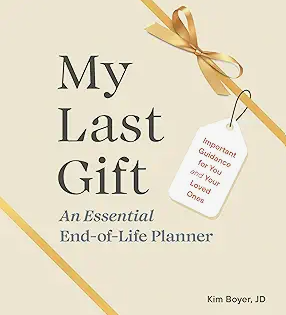
There are a lot of options for workbooks that can help you put all of the relevant information together in one place. Check out their Table of Contents to see which of these workbooks best fit your needs. I chose My Last Gift because it was so comprehensive!
You’ll also need to revisit your answers to keep the information up to date.
I’m getting my affairs in order. Are you?